Heron

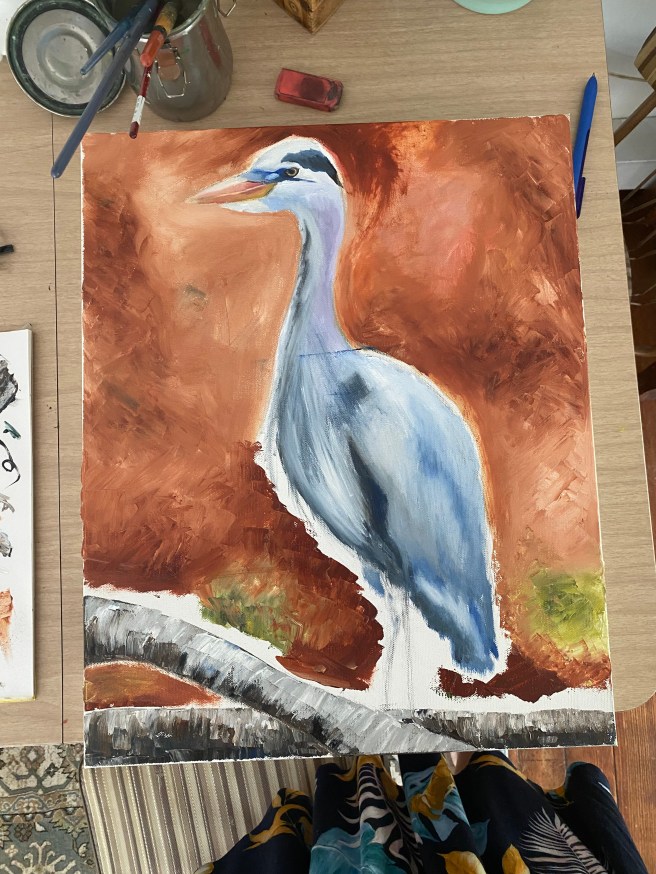
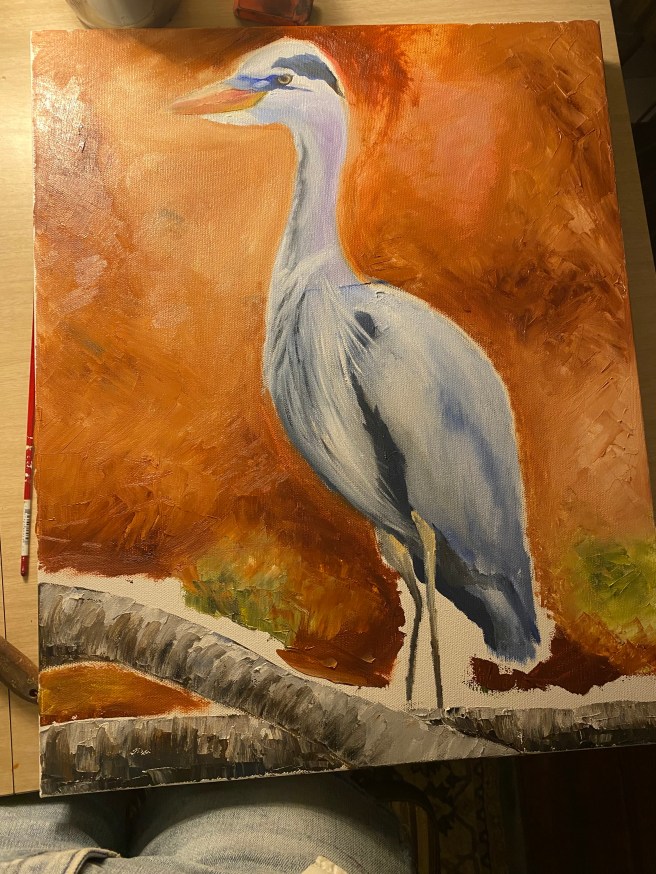
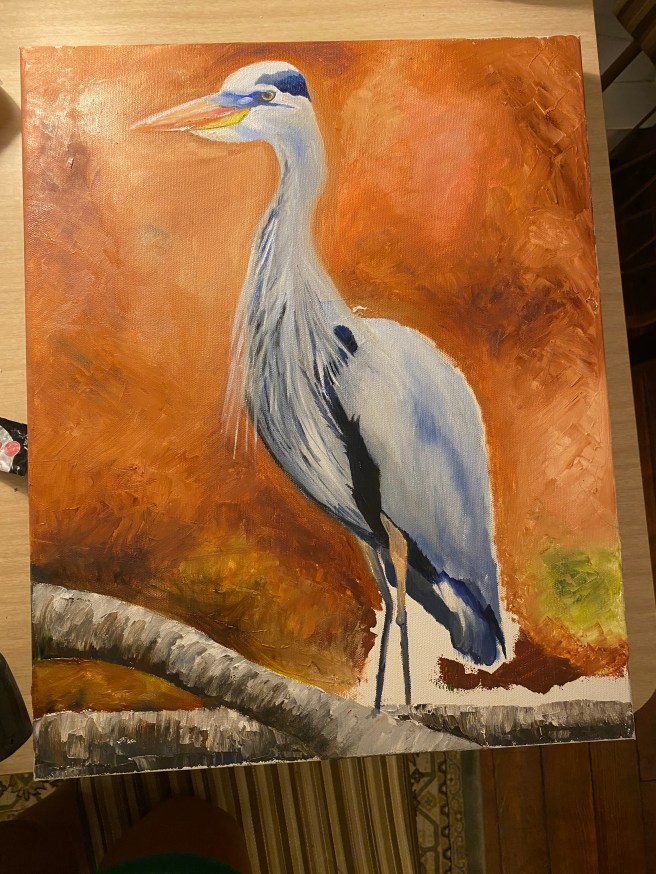
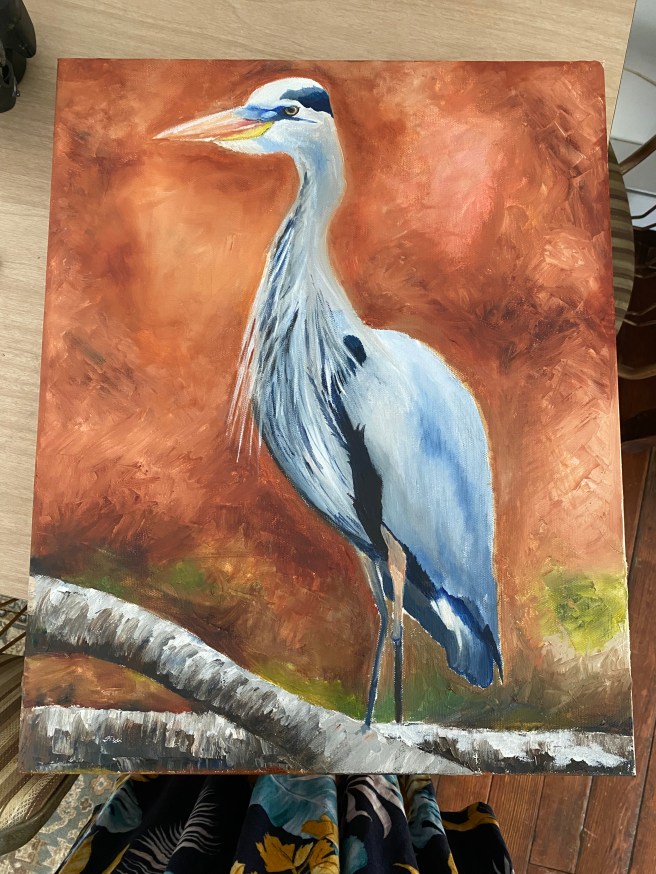
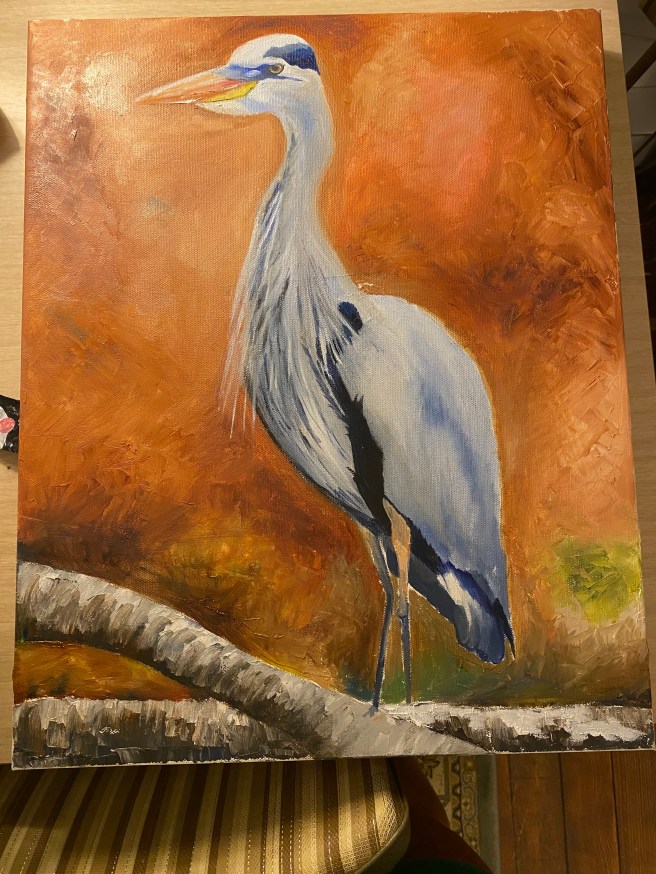
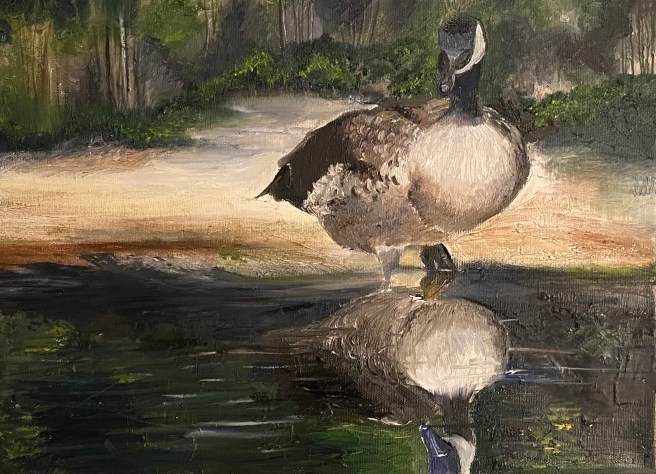
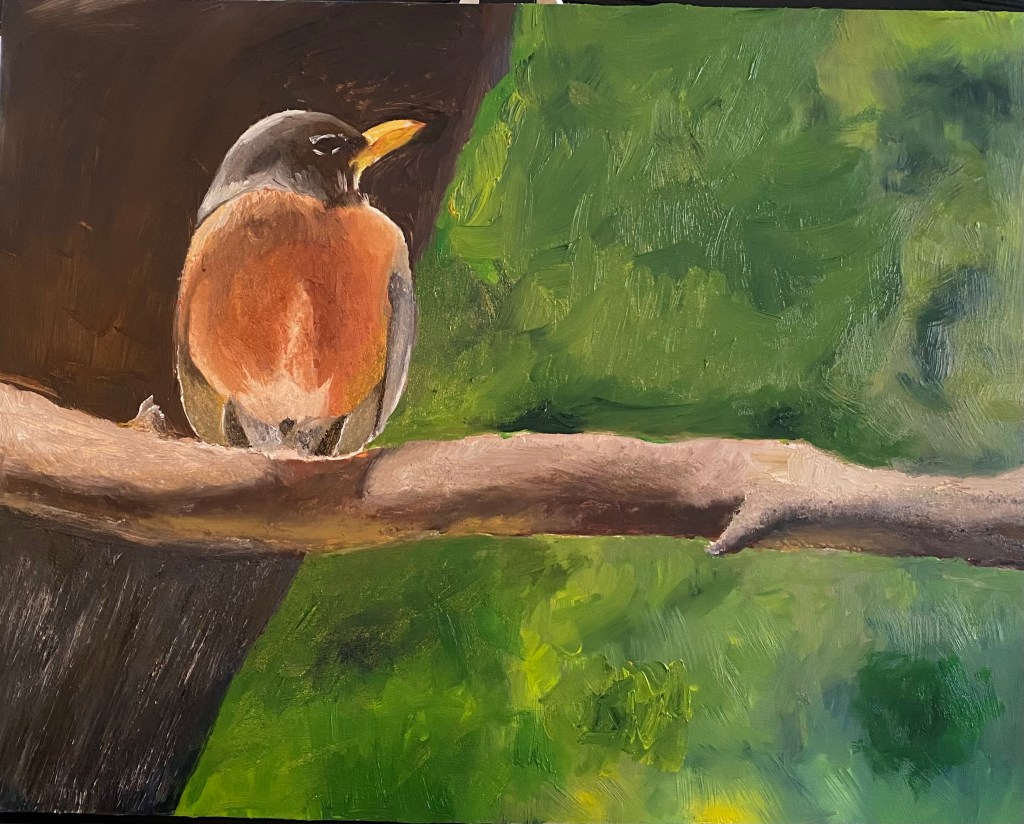
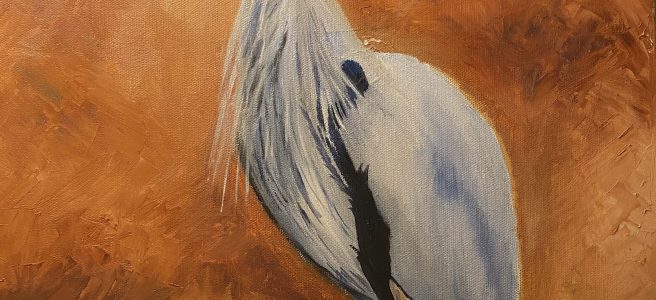
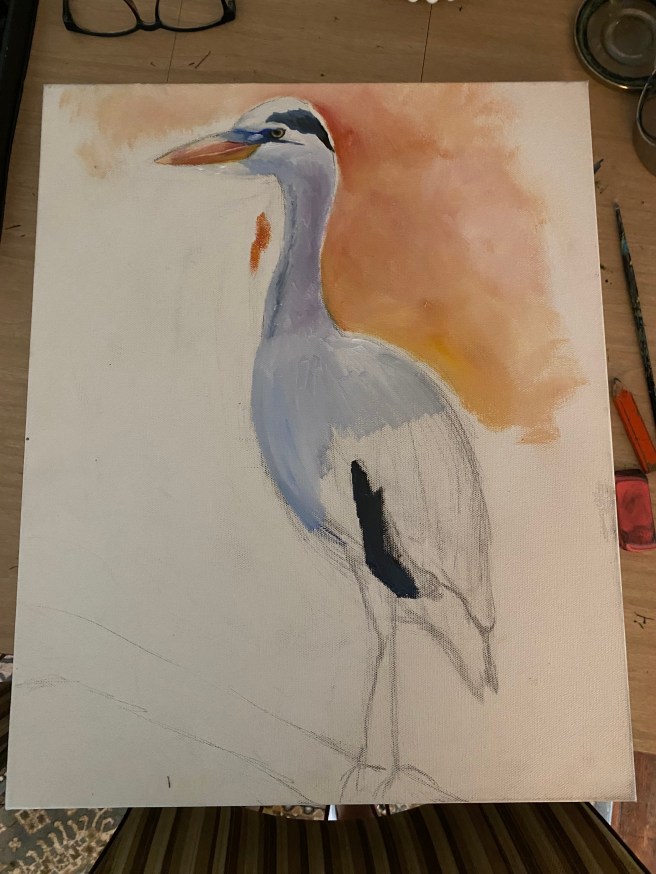
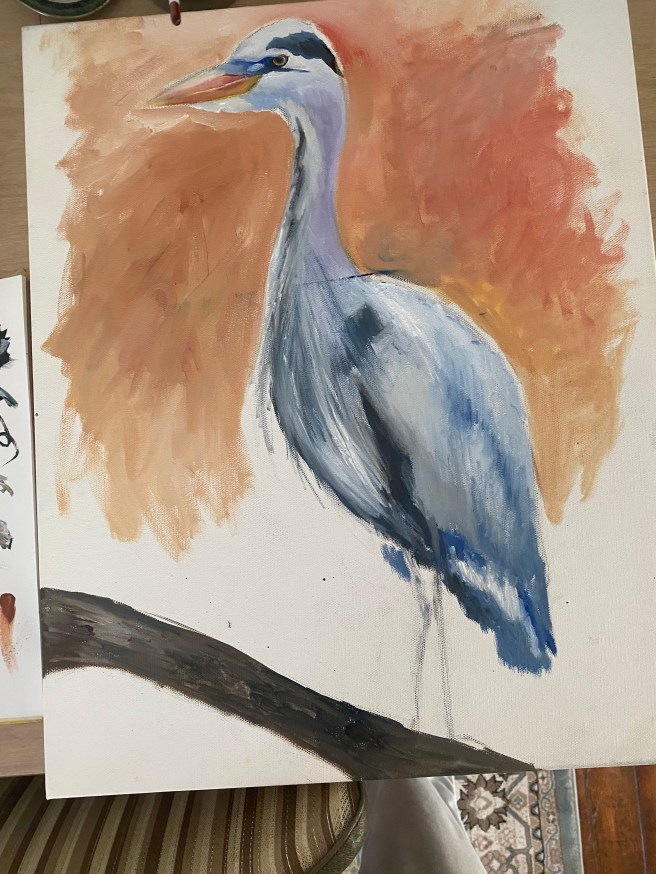
This was the first bird we saw after moving to the river. These birds are quiet. They are patient and still. They can stay in one spot without moving for long stretches of time. Their stillness hides them. Our human eyes are drawn to movement. Stillness acts as a type of camouflage for these birds. They are tall and somewhat majestic and very proud. They hang out in swampy areas and yet it does not seem to diminish their commanding presence and beauty.

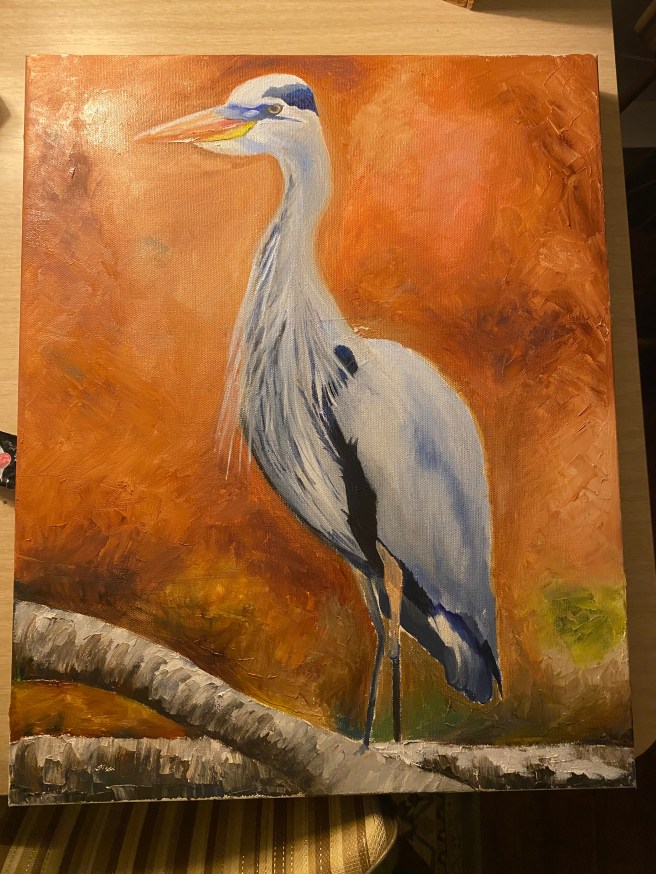
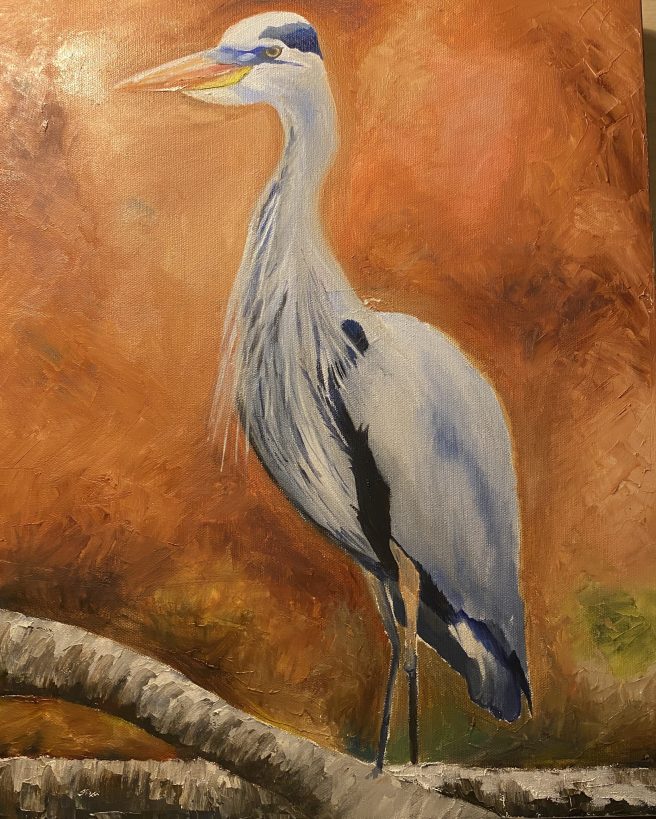
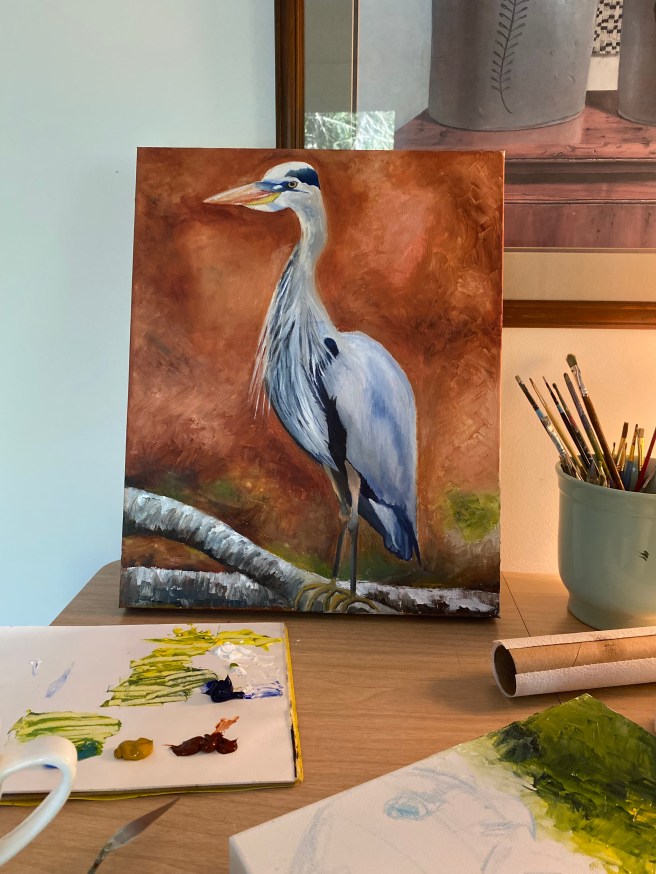
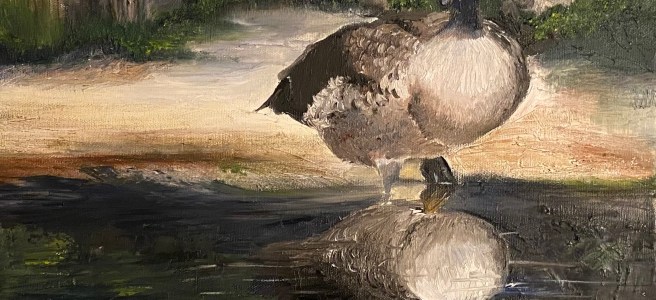
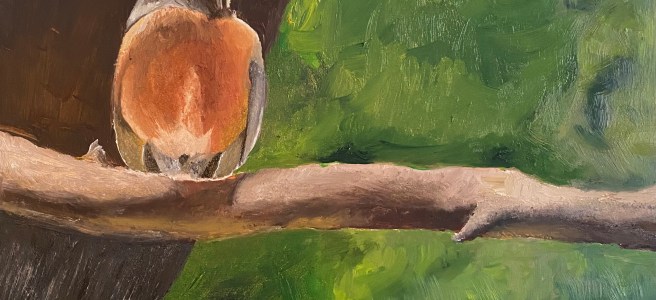
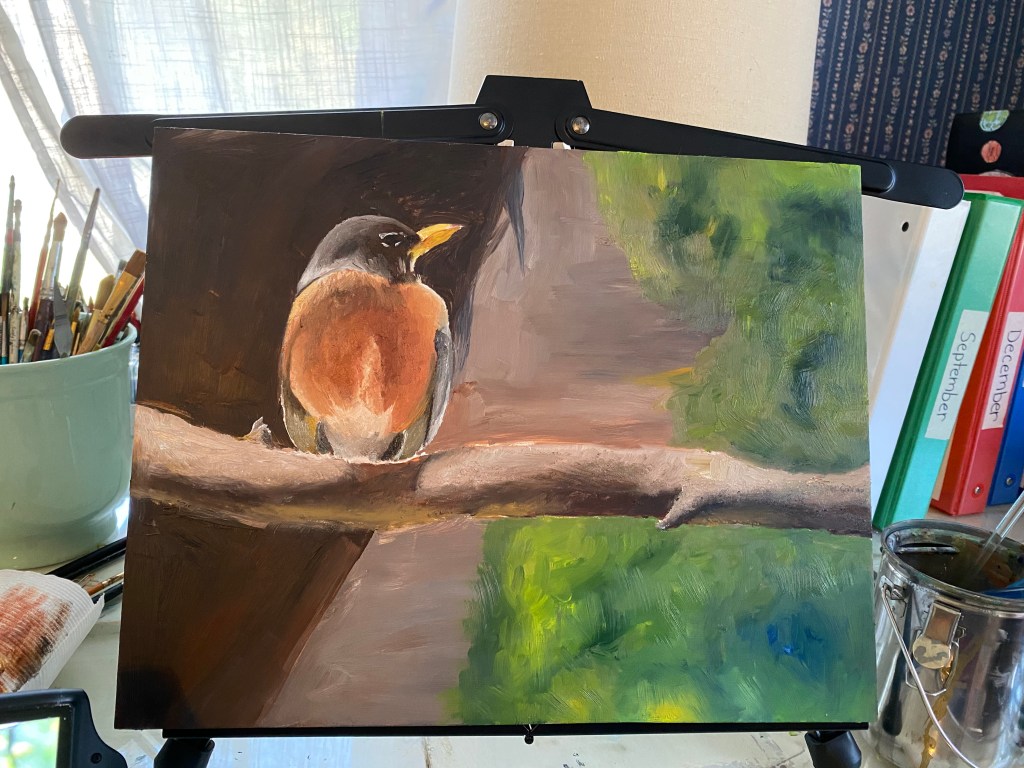
There is a lot I love about this painting, but there are two things I would change. The bird takes up far too much of my canvas and if I would do it over I would make it less. My style is large but it feels loud and overwhelming. Another change would be the background. The reason I chose burnt orange is becasue I took this photo in the fall the foliage was browns and oranges. I decided to blur the background rather than paint it in detail so the focus was the bird. but again the painting shouts at me , not exactly what I want.

what I love about this painting is the contrast in darks and lights, I like the birch trees he is resting on and the sharp edges of his feathers!
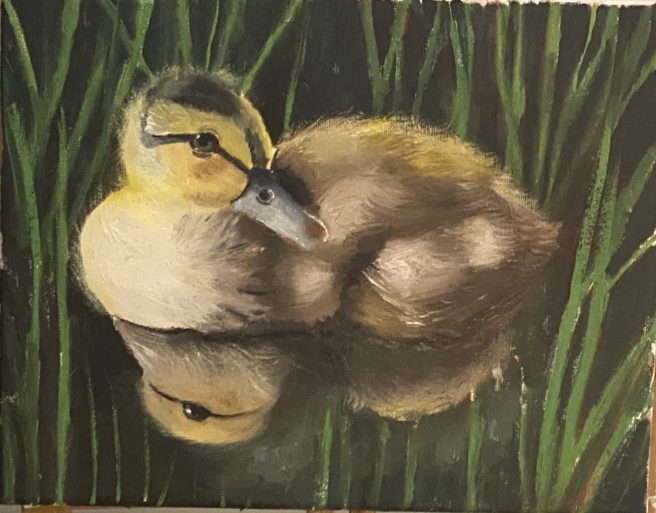
Baby Duck

July 2026

One of my favorite things about painting is the process. I typically start out thinking “I wonder how this will go, can I even do this?” But slowly as I am faithful to simply put my brush to canvas, step by step seeing something beautiful emerges. It is simply not beautiful when I begin.

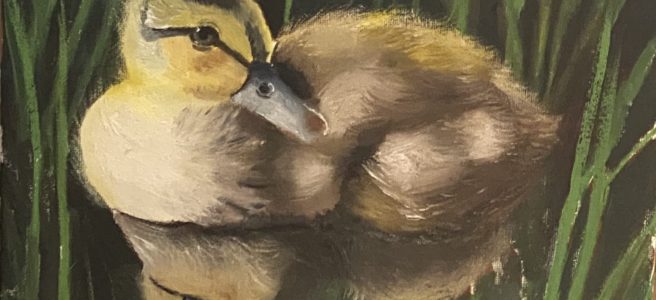
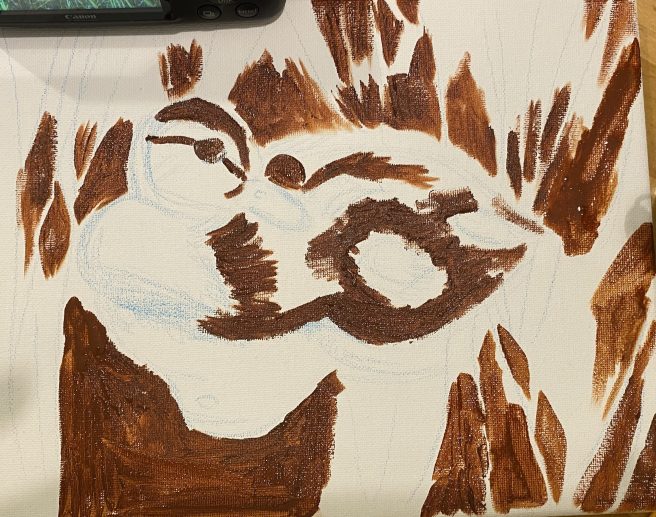
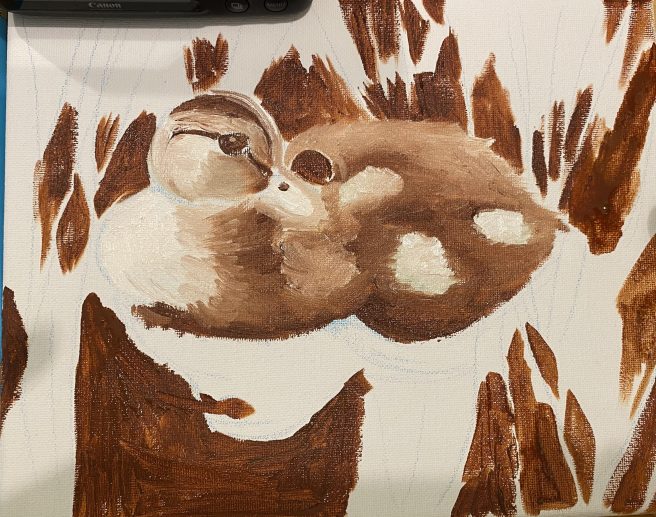
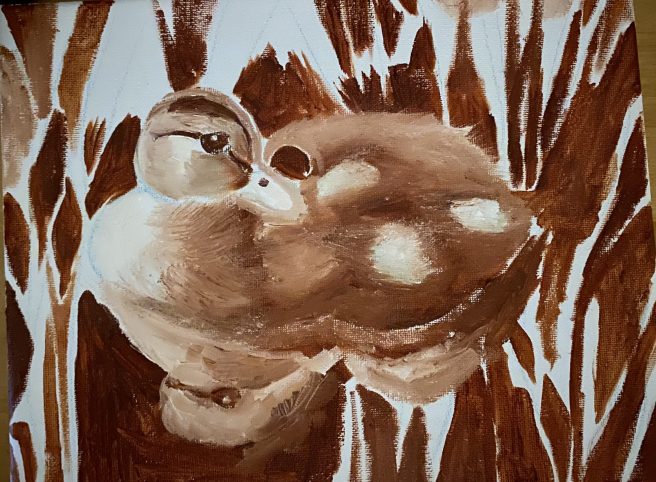
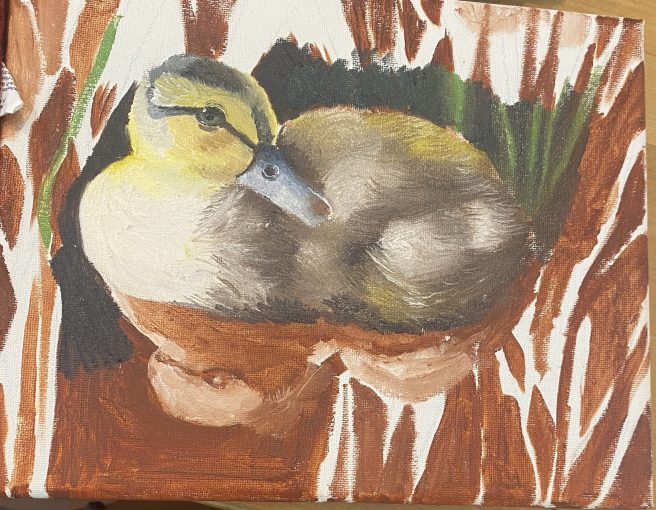
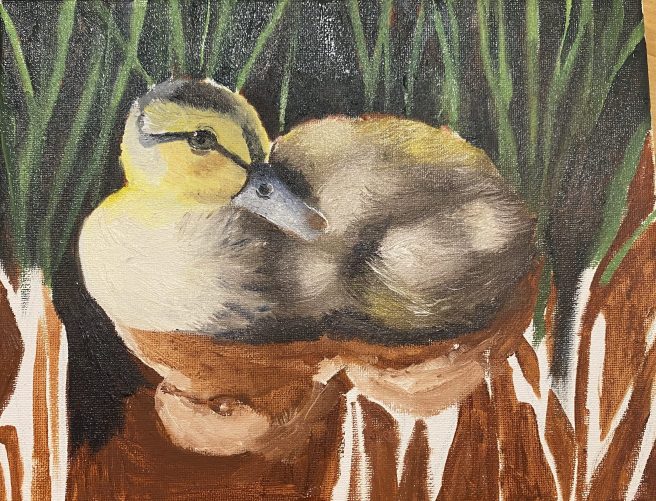
For this baby duck I sketched out a rough image on canvas from a photo I took. What I am mostly concerned about when I sketch is composition. Placement, relationship between the head and the body, the eyes and the beak, are things in the correct and proper place for it to look real and believable. Once my sketch was satisfactory, I used values of burnt Sienna to underpaint the darkest and lightest parts of the painting.

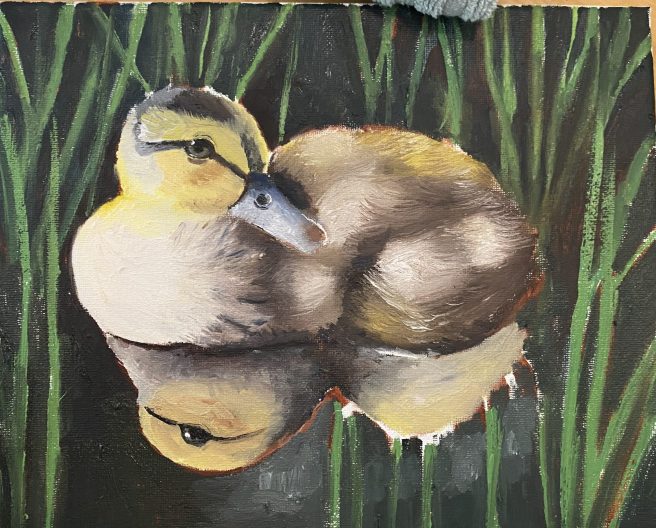
The painting is 90 percent finished. I am pleased with the outcome. Below you will find the process that I photographed. The burnt Sienna underpainting, seems to add a lot of depth and richness to the painting. I used oils and a natural hair brush for this painting.

Why did I choose this baby? I am struck as I watch the baby ducks with their mother. These are just ducks. In the grand scheme of the universe, they are nothing. They are worthless creatures, they are hunting sport, they are dinner on a valentines menu and yet their mothers watch over them as if they were the most valuable and precious gem on the planet. She keeps them separate from the flock to protect them until they are ready to defend themselves. she spreads her wings over them in the evening, and they all gather and huddle beneath her. She always knows where they are. They follow her everywhere closely. She is tender towards them and they are important to her. It amazes me that God has designed life this way with order, with tremendous care and nurture towards the most helpless of all creatures. He provides even for the ducks, how much more will he provide what I need.

Where Beauty Begins

As much as we romanticize—and want to believe—that beauty comes solely from light, we are mistaken when we cling to such shallow ideas. In both the art world and my personal life, it is darkness that gives beauty its depth, its mystery, and ultimately allows light to reach its fullest potential.

Is this blasphemy? I don’t believe so. I have no intention of denying the power, purity, or exquisite nature of light. Rather, I seek to suggest something deeper: beauty requires balance. Light and dark are not enemies. And more often than not, beauty begins in darkness.

This truth is not only artistic—it is sacred. In the beginning, the earth was formless and full of darkness, and God brought forth the light. He did not erase the darkness; He infused it with light. He preserved what was necessary for the world to exist in fullness. Darkness was not a flaw to be corrected, but a foundation to be transformed. 

The same is true in art.

Darkness gives form to light. Shadow creates dimension. Contrast reveals truth. Without darkness, light has nothing to speak against—and nothing to illuminate.

Artist Tip: When painting, begin with your darkest colors and shapes. Let them establish the structure and emotional weight of the piece. From there, introduce light intentionally. This approach creates richer depth, stronger dimension, and a more honest visual story. Your final work will feel grounded, alive, and true.  

Sparrow Hawk

Photo and painting by Kim Blenkhorn

Oils on Canvas

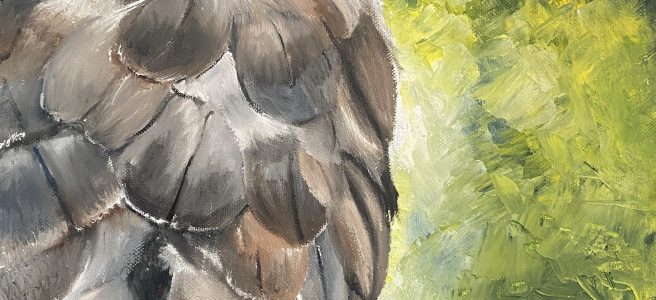
Here is a painting of a sparrow hawk that hangs around our backyard in the summer time. Every once in a while we will hear a screaming and see him carrying something in his talons to a near by limb. He is beautiful but vicious I cannot decide if I like him because he is beautiful or hate him because he preys on the innocent baby birds and chipmunks.

Ellie Wiesel

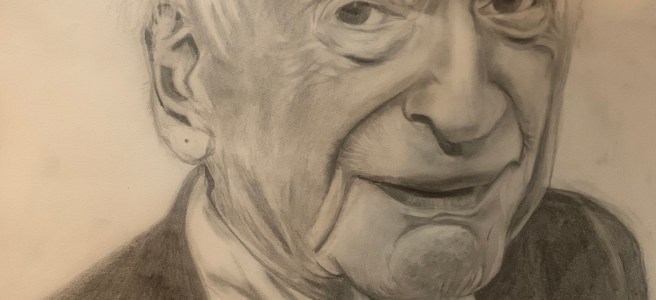
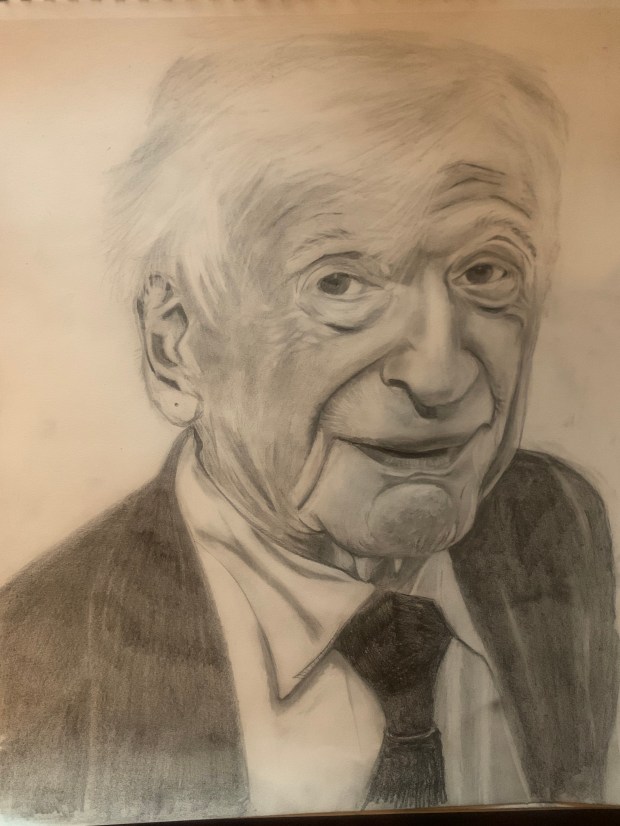
Ellie was sent to a concentration and a death camp in Hitler’s Germany during WWII because he was Jewish. He survived ; his father did not. He tells a most important historical event through the eyes of one who lived it, who starved through it, who died inside because of it. He tells it well.

Adolf Hitler determined that all Jewish people were corrupting his idea of perfect race. Hitler was a madman. He killed 6 million Jewish men, women, and children, old and young alike and many more of various races and reasons. Many of the German people during WWII went along with him either out of fear , ignorance or hunger for power; and some helped the people whom Hitler targeted. “War is like an x-ray” I cannot remember who said it, but it is painfully true. It reveals what is inside each of us. Is there good or evil? War will tell us.

We must remember the Holocaust. We must read and learn and not forget the terrible crimes committed against the Jewish people, especially now, as painful and difficult as it is to remember that humanity could be so cruel and inhumane to other humans. If we forget; God help us all. We cannot forget the evil that lies within us. and we cannot stop asking God to remove it. In his time in the concentration camps, Ellie lost his faith and abandoned the idea of an Almighty God, his question – Where was God? I get it, I do not judge him, or critisize him. When we suffer, we ask; when we suffer we lose faith and sometimes we reject God, we blame him. I think in some ways that is why God came to us, broken and bloody and then died. He came so we could blame him and we did. We all did.

We are so weak, we are so frail and fragile.