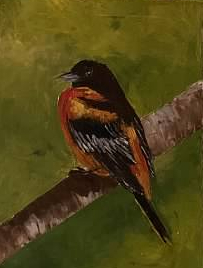
Oriole
This is my most recent knife painting with Oil Painting on canvas. Painting with a knife requires an entire different skill set. The knife does not work like a brush. The paint must be blended and mixed on the palette, not the canvas. When mixed on the canvas it will muddy everything and you lose your image.
Pheonix
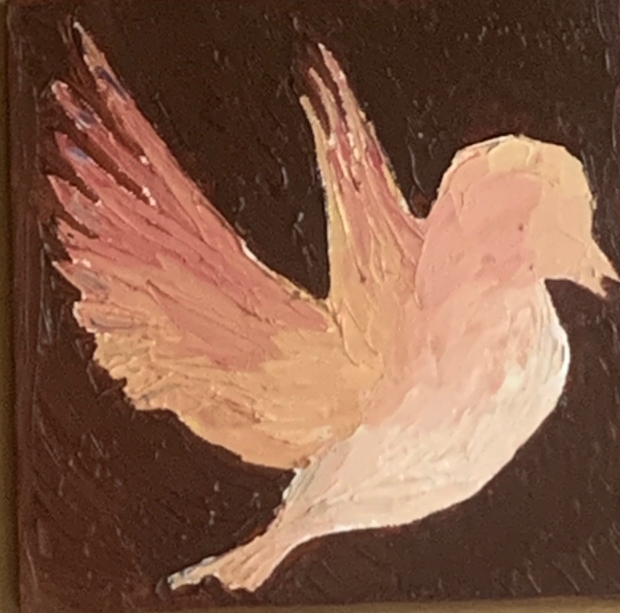
When using a knife the paint must be applied somewhat thick. The knife is responsible for adding texture because of the thickness of the paint. I used the tip of my knife for the majority of this painting and the thickness of the paint reveals alot of texture. i did a little blending here, but only once i had the colors I wanted on the Pheonix. i blocked the colors in and then used a knife to blend them together with short quick strokes.
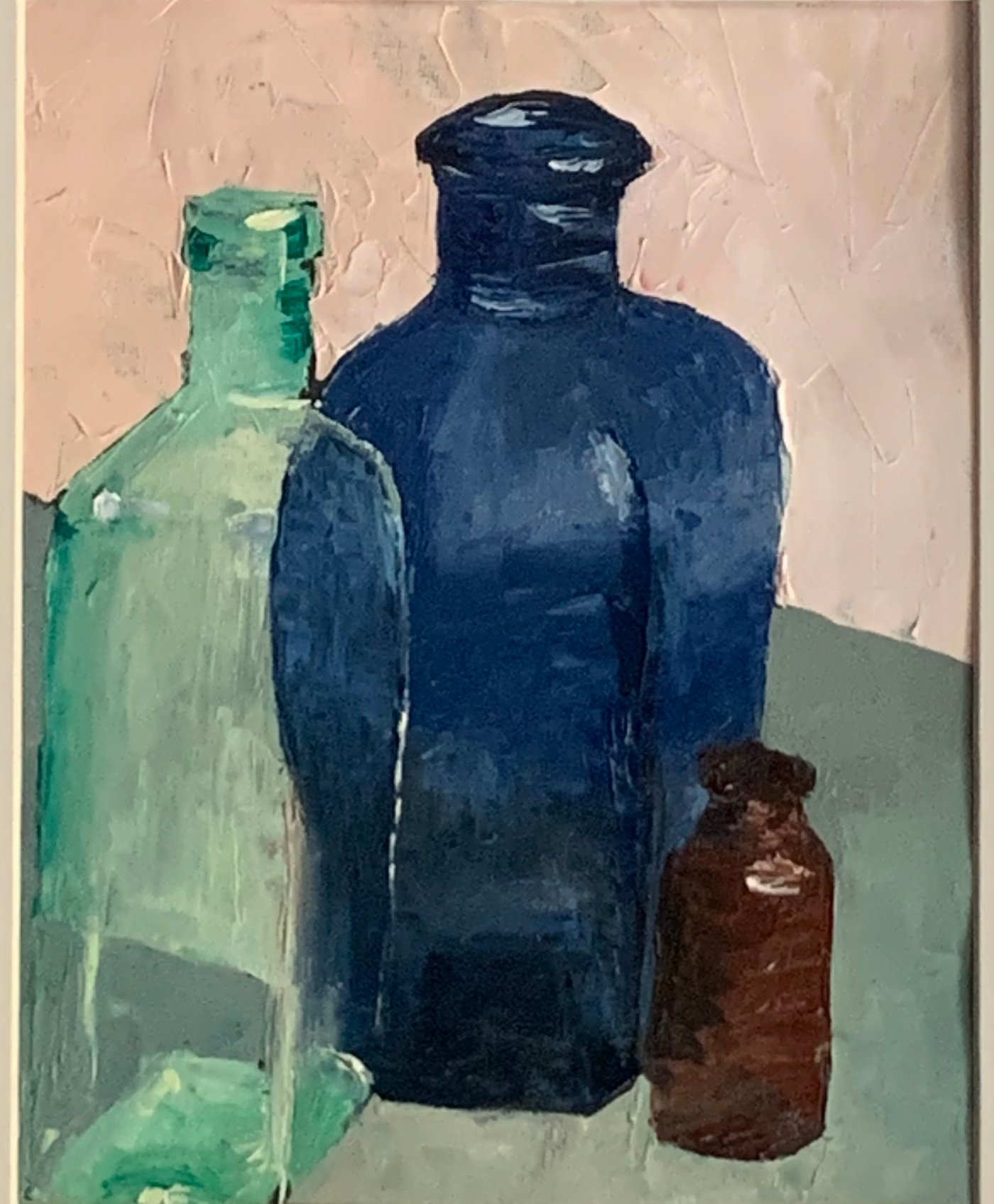
Glass Bottles
Utilize the edge of the knife, sometimes using sharp quick strokes or else slow and controlled. Always build your foundation first by blocking in colors and shapes and layering on details after. and remember to mix the colors on the palette then add the correct color to the canvas where you want it. Knife painting is more forgiving than you would imagine. A wrong color or application can be easily corrected by simply scraping the paint off.
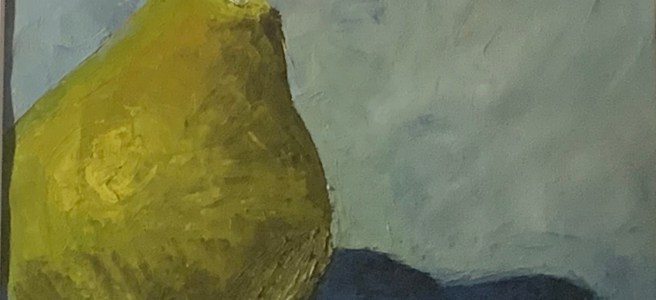
Yellow Pear
This was my first still life knife painting, from my first class at the Danforth Art Museum. Never use black. When adding shadows mix the correct color of the shadow. Also rarely use straight white for highlights. I used the side of the knife for the stem.


Welcome to Camden
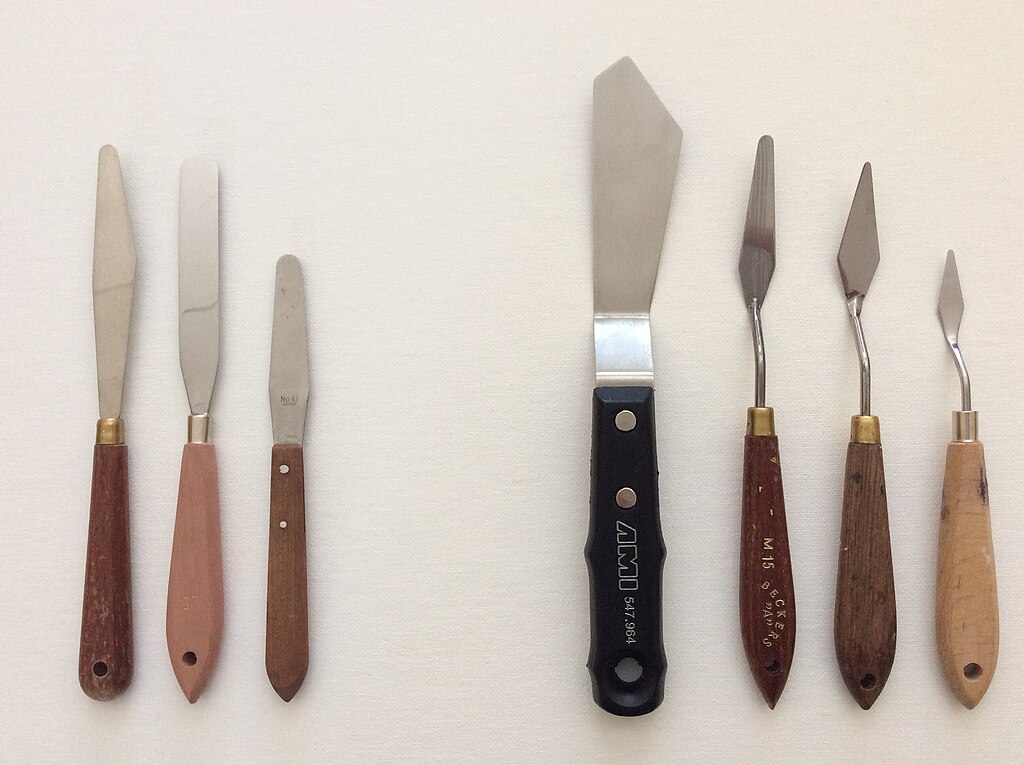
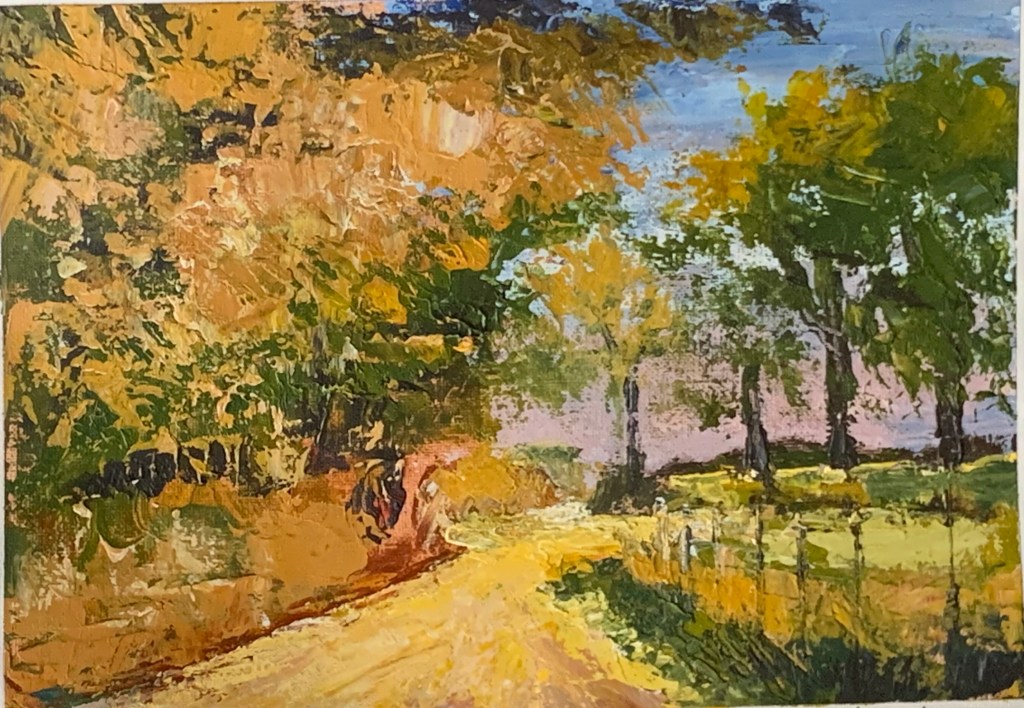
I havn’t learned or mastered details using the knife. The knife can be clunky, unlike the tiny bristles of a brush. for the tiniest details here I used a brush. Knives do come in different shapes and sizes which can be helpful. So if you want to try palette painting , buy a variety of knives.
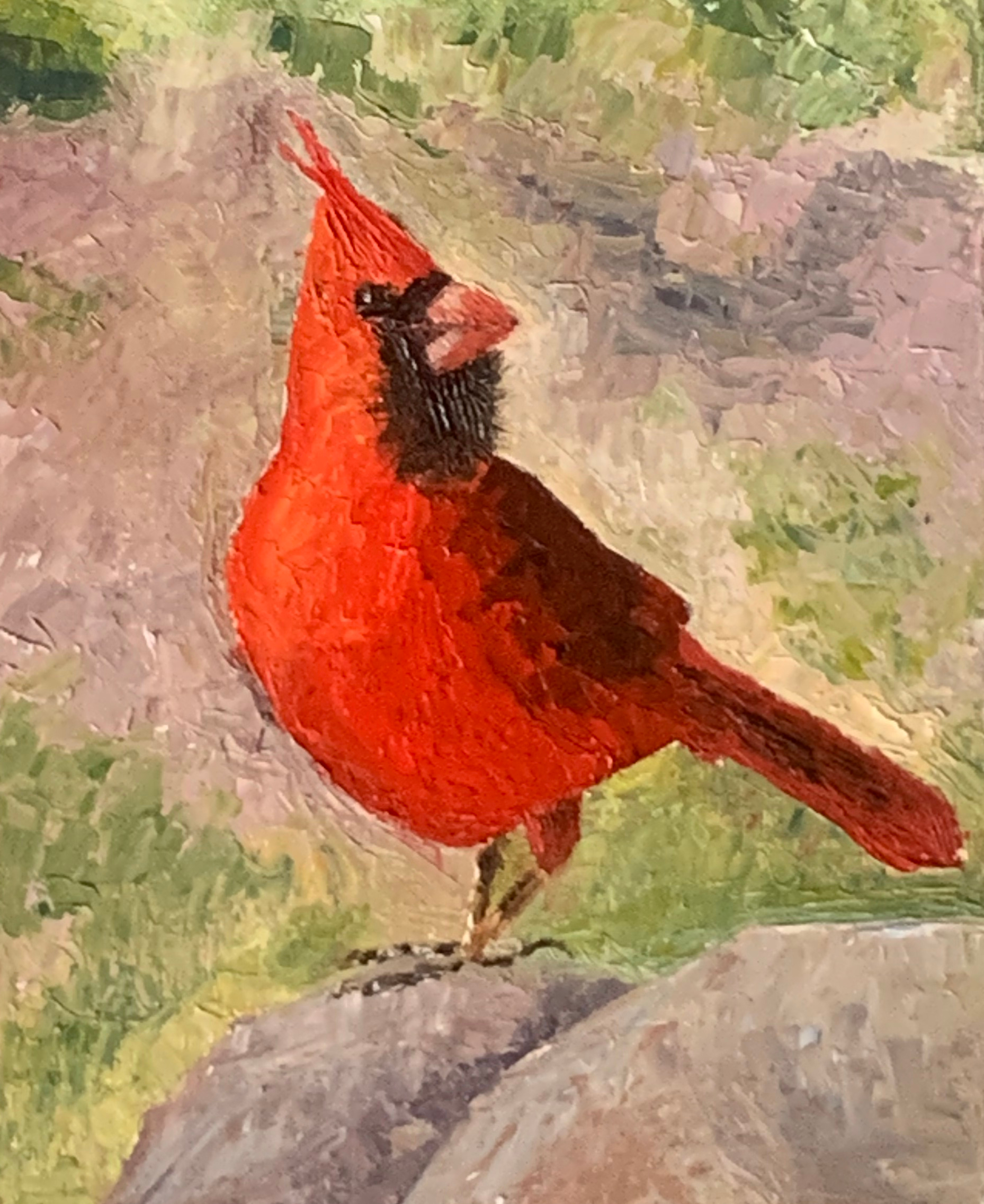
Cardinal
I painted this cardinal after taking several Pallet knife classes. I had a good feel for the knife and how it worked. Don’t be afraid to move it in different ways to get the effect you want.

Acrylic on Canvas
This was the second pear I painted with a knife and I think what works is the background color with the color of the pear. Both painted separately.
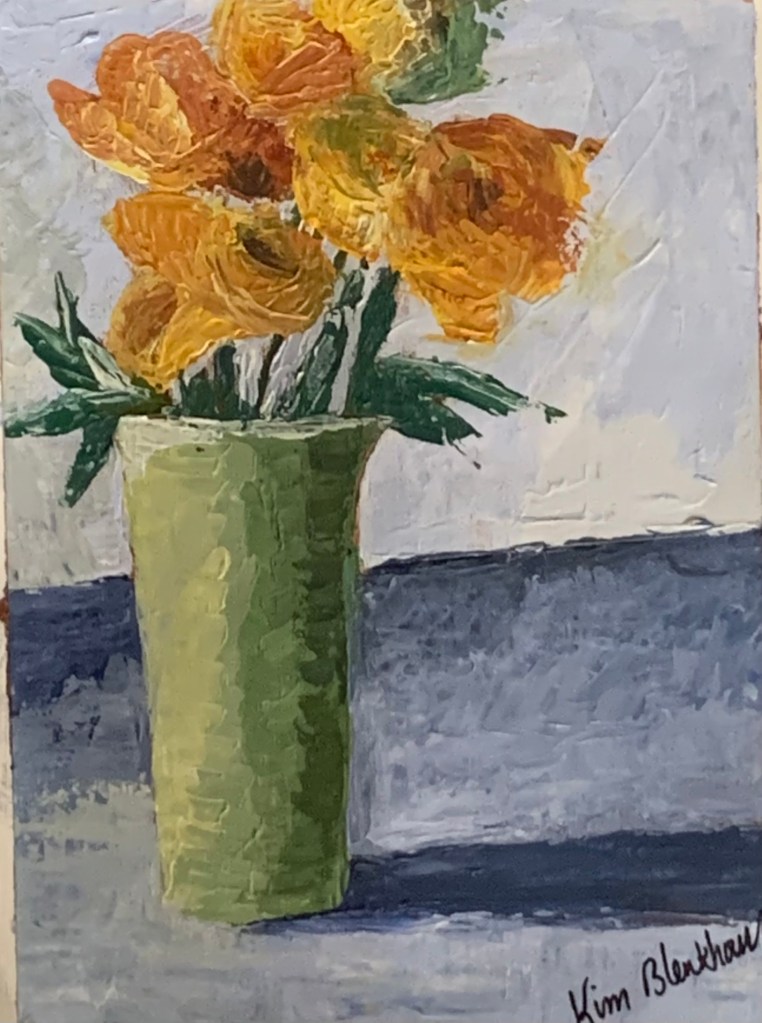
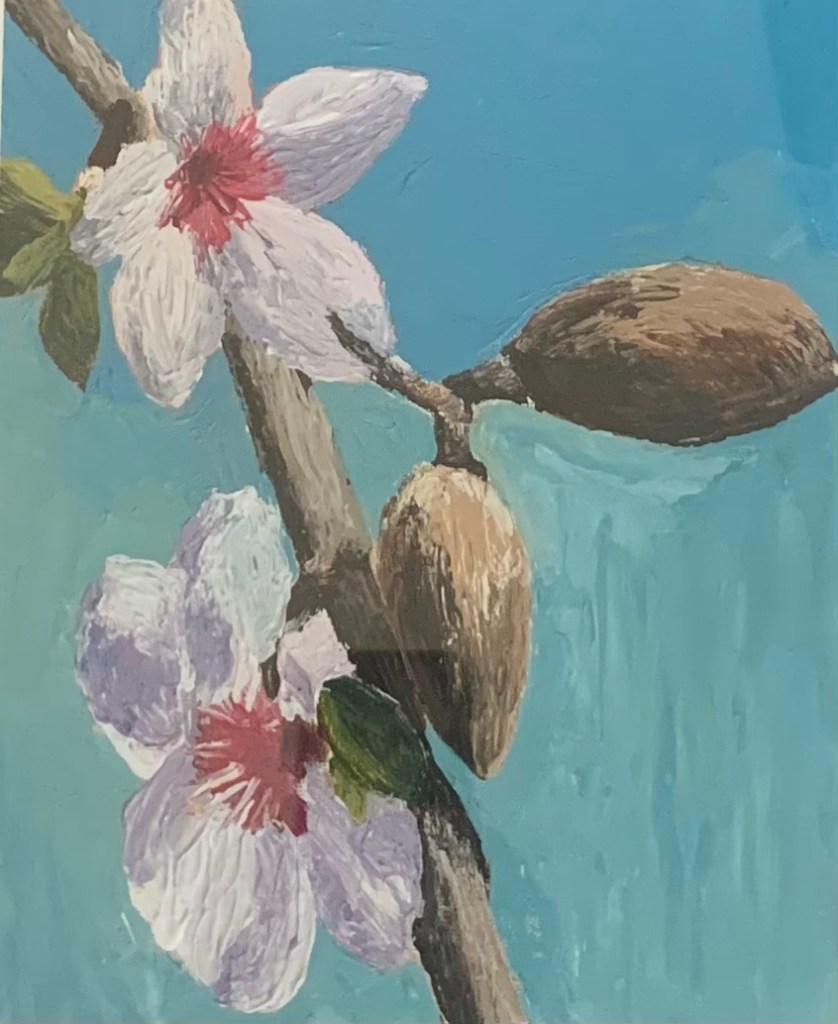
Acrylic is not as easy to use with a knife and I would highly recommend oils if your planning on knife painting. Acrylic dries very quickly making it difficult to add layers and it also tends to be thin, so if you do use acrylic with knife use a heavy body acrylic.




 The Art Place